Lukas Neville

Associate Professor of Organizational Behaviour, Asper School of Business, University of Manitoba

Anonymity and the Supermarket — June 15

Anonymity and the Supermarket

Photo:  Seuss

Peter Klein has an interesting post today about the history of the supermarket.  The supermarket succeeded against small grocers in part because they offered shoppers an anonymous, impersonal experience, he suggests, based on some recent research by historians examining shopping in post-war England:

“The nostalgics don’t even have their history right. A big research project at the universities of Surrey and Exeter is currently studying shopping in post-war England… Supermarkets were often welcomed by younger and working-class women. A retired secretary interviewed by the project recalled, as a young bride, asking the butcher for a tiny amount of mince. ‘Oh, having a dinner party, madam?’ he sneered. A woman who bought anything expensive or unusual risked disapproving gossip, spread by shop assistants. The project found press advertisements promoting the anonymity of supermarkets, as well as their convenience.”

Given that privacy in our purchases was a draw of the early supermarket, it is interesting how that tradition is both preserved  and eroded in interesting ways by the contemporary supermarket.

I’m in Buffalo, New York this month, and have been doing some of my shopping at Tops and Wegmans, two popular mid-Atlantic chains.  At least superficially, they offer a great deal of the same anonymity of the early supermarket.   They’re open late (and often round the clock), and many have self-service checkouts.  Not even the pimply teen at the cash has to see what you’re picking up.  Go in the middle of the night to a supermarket outside of your neighbourhood, and use the self-scan aisle to check out, and your shopping habits are free from prying eyes.

At least, superficially.

One of the interesting things I’ve found here is the aggressiveness with which loyalty-card systems are promoted.  Of course, in Canada, there are loyalty cards.  The cards are used to build loyalty (as their name implies; I prefer to shop at Metro because I earn Air Miles, or Loblaw because I earn PC Points), and to promote particular products (double points on Oreos!)

But here, the Tops and Wegmans ‘club’ cards are required to get ‘discount’ prices on an extremely wide range of items.  In many cases, the posted prices in the aisle are ‘club prices’, with the considerably-higher non-club prices indicated in small print beneath.  The use of the loyalty cards with just about every purchase (the cards, of course, are free) means that grocers can track every last detail of your buying habits:  What you buy, when you buy it, how you respond to sales, and so on.  This has always been the case to some degree, but you could always skip the tracking when you paid cash rather than with credit or debit.  By making it uneconomical to not use your ‘club’ card, the grocers can now track even your cash purchases.  The primary use of the loyalty cards is not to build loyalty directly:  It is to generate data.

It’s an interesting dynamic:  The original appeal of the supermarket, as Peter notes, was anonymity.  In the contemporary supermarket, we have an experience that is highly impersonal but not in the slightest bit anonymous.

Automatic Trust? — June 7

Automatic Trust?

“Before volunteers participated in the Trust Game, Murnighan and Huang asked them to provide the names of people they trusted and people they did not trust. Then researchers quickly flashed these names to subliminally prime the study participants. After that, the subjects were asked if they wanted to send money to an anonymous stranger, with the understanding they might get some money back. Participants who had seen the names of people they trusted sent larger sums and were more likely to believe money would be returned to them. Because the priming was so brief—mere milliseconds—no one was able to recognize the names that had been flashed before the Trust Game.”

A Trusted Name (Li Huang and Keith Murnighan)

The Doormat Problem — May 24

The Doormat Problem

New findings (via Eric Barker) on the dark side of forgiveness:

The tendency to express forgiveness may lead offenders to feel free to offend again by removing unwanted consequences for their behavior (e.g., anger, criticism, rejection, loneliness) that would otherwise discourage reoffending.

Consistent with this possibility, the current longitudinal study of newlywed couples revealed a positive association between spouses’ reports of their tendencies to express forgiveness to their partners and those partners’ reports of psychological and physical aggression.

Specifically, although spouses who reported being relatively more forgiving experienced psychological and physical aggression that remained stable over the first 4 years of marriage, spouses who reported being relatively less forgiving experienced declines in both forms of aggression over time.

I’m going to guess that the study of forgiveness and the study of justice are going to merge even further in the near future.  Forgiveness does great things at the individual and social levels.  Forgiveness helps people stay happier, sleep better and live longer.  And it can set the stage for reconciliation and the resolution of conflict between individuals or social groups.

But revenge can be adaptive, too:  It’s a way of enforcing social norms and deterring future transgressions.

Some research is starting to find that forgiveness is easiest to achieve when it’s paired with justice.  It’s easier to forgive (surprise, surprise) when the score has been settled.  And safer, too — we don’t worry about being doormats or showing transgressors that they can offend with impunity.

So what’s wrong with the punish-then-forgive approach?  Well, for starters, both parties in a transgression tend to see it differently.  The response that is perfectly proportionate for one party may be seen as a vengeful escalation by the other.  Conflict spirals of retaliation and counter-retaliation can ensue.  And any feelings of obligation or indebtedness that might stem from the forgiveness can be wiped out by the punishment.

The coolest new research on forgiveness, in my opinion, is work that blends forgiveness with restorative justice.  While justice can increase forgiveness, the form of justice doesn’t need to be punitive and retributive.  Restorative approaches to justice are the best of both worlds:  They respond to the victim’s need for acknowledgement of harm, they promote conciliatory behaviours by the transgressor, and they focus on restoring the shared norms and values needed to keep similar transgressions from occurring again.  All the forgiveness, none of the doormat-ness.

If People Trust Scientists, Why Don’t They Trust Scientific Findings? — May 5

If People Trust Scientists, Why Don’t They Trust Scientific Findings?

In this month’s Scientific American, Daniel Willingham describes a friend who clings ferociously to the discredited belief that vaccines cause autism.  The puzzle?

“My friend insists that he trusts scientists.  In this respect, he is like most Americans. In a 2008 survey by the National Science Foundation, more respondents expressed “a great deal” of confidence in science leaders than in leaders of any other institution except the military. On public policy issues, Americans believe that science leaders are more knowledgeable and impartial than leaders in other sectors of society, such as business or government. Why do people say that they trust scientists in general but part company with them on specific issues?”

Of course, in this specific instance, it could simply be our well-documented willingness to seek information that confirms our beliefs and hold fast to those beliefs in the face of discrediting information.  But I think Daniel has a point:  People’s expressed trust in scientists doesn’t really mesh with the trust revealed by their behaviour.

So, why do people say they trust scientists but fail to trust scientific findings?  I have three thoughts:

  1. They have low trust in the funders and gatekeepers of scientific research:  Government, industry, and the press.  They think that the ‘real’ findings are out there, but are being hidden or repressed by scientists’ various nefarious masters.
  2. They are bad at distinguishing good science from junk science.  Both quacks and legitimate scientists hold PhDs.  The distinctions that help us make sense of which to trust are either non-obvious to laypeople and/or depend on trust in the other institutions mentioned above.
  3. It’s hard to know what the scientific consensus is on an issue from press coverage alone.  What’s the best-supported position on any given issue?  You’d have a hard time gleaning it on just about any topic from press coverage.  Press coverage doesn’t meta-analyze — it often provides a he-said/she-said account with equal time allotted to talking heads from two sides of an issue.

Update:

Steve Saideman’s suggested answer is perfect in that it offers both snark and parsimony:

4.  It requires reading.

The Trust Trap — May 1
Is Not Voting Really A Sign Of Trust? — April 22

Is Not Voting Really A Sign Of Trust?

In the Ottawa Citizen, Will Wilkinson of the Cato Institute assures us that record-low voter turnout is nothing to worry about.  In fact, he argues, it’s a sign of social cohesion:

Contrary to the folklore of democratic health, low turnout can signal social solidarity, reflect real civic virtue, and even make democracy work better.

We humans are adversarial beings, easily riled by us-versus-them conflict. (Even Canadians!) Democratic politics is a wonderful way to peacefully channel social antagonism into ritual symbolic warfare… 

Lower levels of turnout may suggest that voters actually trust each other more — that fewer feel an urgent need to vote defensively, to guard against competing interests or ideologies. Is it really all that bad if a broad swath of voters, relatively happy with the status quo, sit it out from a decided lack of pique?

Of course, there’s something to this argument in certain cases.  Have a look at some instances of very high voter turnout — the 1973 Northern Ireland Assembly elections, for example.  Intergroup conflict and siege mentalities can certainly drive people to the ballot box.  And in the US, there’s some evidence that in some races, voter turnout is being driven by mobilizing polarized bases.

But is low turnout necessarily an indicator of high trust in one another?

Nuh-uh.

Have a look at this diagram, from research conducted by Robert Boeckmann and Tom Tyler:

What this shows is that there is a significant link between generalized trust (people’s overall trust in one another) and political engagement (voting).

The overall story here is that when civic engagement is high (when people socialize with neighbours, read local news, and discuss local issues with their neighbours and community leaders), it builds a sense that those around us are generally trustworthy.  And when we see our fellow citizens as trustworthy, we tend to do the civic-minded thing and show up to the ballot box.

So, despite Wilkinson’s optimism, I don’t buy the idea that low turnout signals is a signal of a shiny, happy, trusting polity.

Smiles and Trust — April 18

Smiles and Trust

“Convincing smiles are to some extent a signal of the intrinsic character of trustees: less honest individuals find smiling convincingly more difficult. They are also informative about the greater amounts that trustees playing for higher stakes have available to share: it is harder to smile convincingly if you have less to offer.”

— Centorrino, Djemai, Hopfensitz, Milinski & Seabright, 2011 [PDF, via]

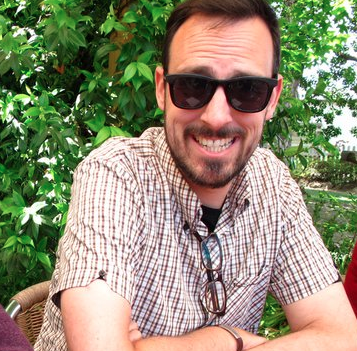
Photo:  My most authentic smile.  Don’t you find me trustworthy?

Do Republicans really distrust government? — April 14

Do Republicans really distrust government?

Are Republicans really suspicious of government?  Maybe not.

Mike Sances presents some data over at The Monkey Cage that suggest that both Democrats and Republicans’ trust in government is essentially a partisan matter:  Republicans are more trusting of Republican officeholders, while Democrats tend to be more trusting of government when Democrats are in office.

This bolsters Fabio Roja’s recent observation about American political ideology and the size of government:

“The difference between liberals and conservatives is not that one is for more government and the other wants less government. They just want government to do different things.”

Social Dilemmas in University Admissions — February 25

Social Dilemmas in University Admissions

Early university admission programs tend to be unfair:  The offers are made before financial aid decisions, meaning they can only really be taken by the wealthy.  Harvard and Princeton got rid of them, in part, on this basis.

Only problem:  Nobody followed suit.  Other universities continued to offer early admission, and this week, both Harvard and Princeton decided they no longer wanted to be the unilateral cooperators in a field of defectors.

Princeton’s President, Shirley Tilghman:

“In eliminating our early program four years ago, we hoped other colleges and universities would do the same and they haven’t.”

For a program like this to succeed, I think there needs to be an institutional underpinning.  The unilateral action of a couple schools (even leaders like Harvard and Pton) won’t resolve this social dilemma.

What is needed is a way to get schools to collectively commit to ending early admission, and create strong enough sanctions to keep any single school from defecting, accepting early admissions, and reaping the benefits.

But what might an institutional solution look like?

One thing that springs to mind are the institutional arrangements for the shared handling of undergraduate applications.

Imagine if schools that viewed each other as competitors for the same students (say, the 60ish heavyweights of the Association of American Universities) created a new centralized agency for centralizing their application processes, or expanded the ambit of the Common Application group to include a policy role.  They could set shared policies for applications (for example, no early admission); only schools who played ball on these shared policies would be able to benefit from the pool of applicants and cost savings associated with centralization.

Unfortunately, such institutional arrangements may be challenging. Previous attempts at coordination (on aid policies, through the Overlap Group) attracted the attention of the antitrust jakes at the Justice Department, leaving schools skittish about coordination.

It’s unfortunate that both Harvard and Princeton have had to roll back an important step toward diversity and access in higher education.  I admire their verve in trying to set an example — but I’m pretty confident the early admissions dilemma won’t be solved with unilateral action.

Trust Vs. Trickery — February 20